
Architecting Cultures of Care.
The isolation, polarization, and exhaustion of modern life are not personal failures. They are structural ones. I use cognitive engineering to rebuild the lost infrastructure of human connection.
the problem
We are trying to solve systemic problems with individualistic tools. It will never work.
The deepest crises of our era — declining mental health, social fragmentation, political polarization — are not the result of individual weakness. They are the predictable outputs of systems built to extract rather than to connect.
Over the past twenty-five years, a particular vision of technology took hold: one that measured human attention in milliseconds, optimized behavior at scale, and treated community as a market inefficiency to be dissolved. We did not stumble into this future. We overengineered our own fragility.
The result is a world where 53% of adults live below the threshold of meaningful social connection. The cognitive friction of caring for one another has become so high that many have stopped trying, embedded in an architecture of isolation.
We are standing at a fault line that will fundamentally alter the course of human civilization. The question is not whether things will change. They have and will. The question is whether we will choose the terms by which we will change.
Do we continue down a path toward ecological, social, and moral exhaustion? Or do we do the harder, more urgent thing: reimagine a world where ethics comes first, where technology accelerates the pace of doing good, and where human flourishing is the fundamental metric?
The intellectual tools for this change already exist. Cass Sunstein showed us that environments shape behavior at scale. The tradition of Relational Communitarianism showed us that interdependence is not a weakness, but the precondition for a functioning society. What remains is the will to extend these ideas into the systems we build today.
Environments can be redesigned. We can make belonging the path of least resistance. And critically, this is not a rejection of how the economy works — it is a reorientation of its incentives toward something far more durable than attention.
The Architecture of Belonging | When Will We Meet Again?
Friendship has a physics.
Research by sociologist Jeffrey Hall suggests it takes roughly 50 hours of shared time to form a casual friend, 90 to form a real one, and over 200 to build a close bond. Maintaining an active close friendship requires around 2 to 4 hours of meaningful contact per month. That is not a lot — until you try to schedule it.
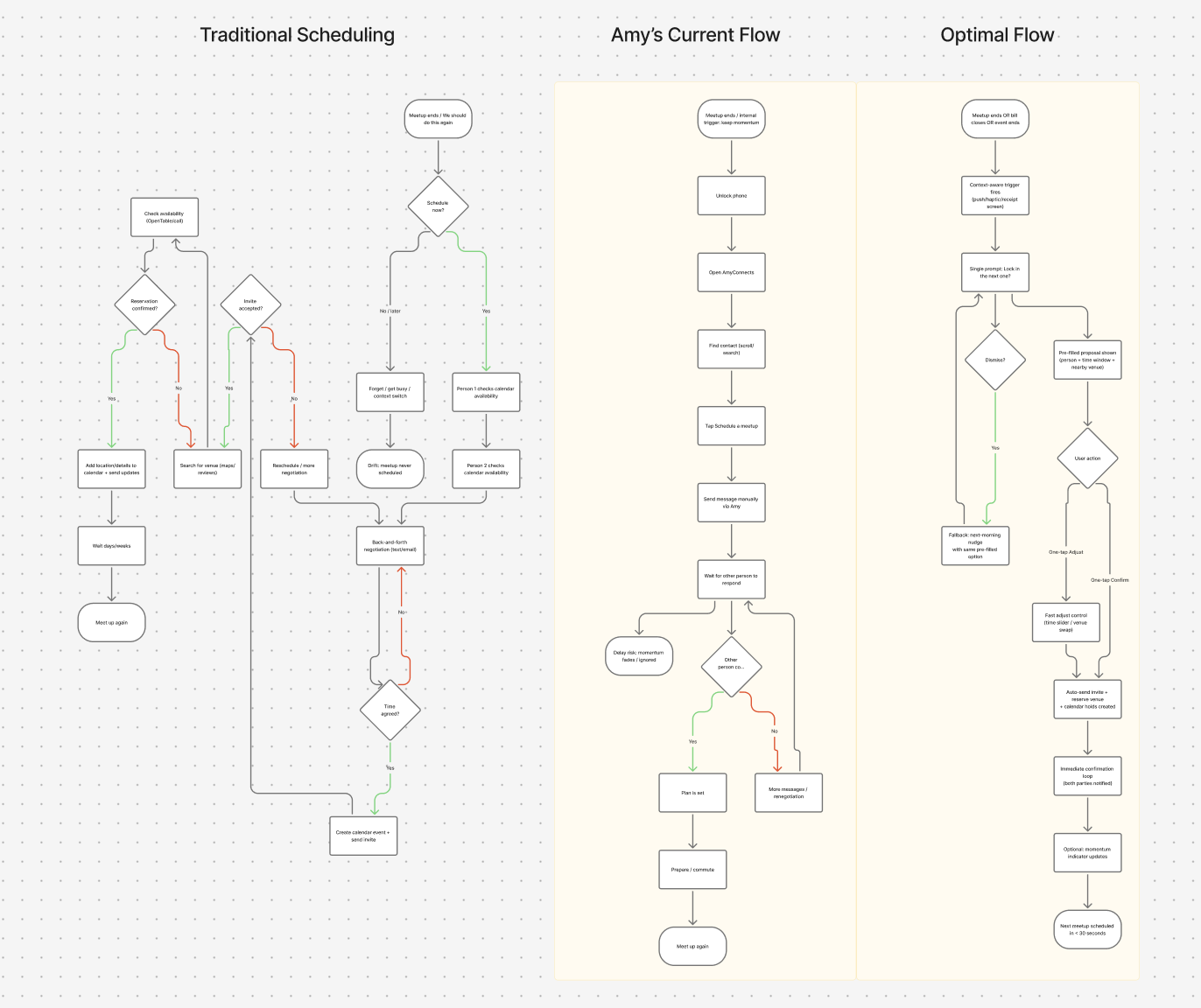
The hidden cost of adult friendship is not time. It is friction. Every attempt to meet a friend requires a negotiation: a text thread that stretches over days, a calendar invitation that feels vaguely corporate, a phone tag that eventually nobody wins. By the time both people find a slot, open a restaurant app, make a booking, and confirm — ten minutes of logistical effort, spread across three days of context-switching — the momentum that made you want to meet in the first place has already dissipated.
The behavioral outcome is predictable: only the strongest relationships survive the overhead. Casual friendships decay. Proximity becomes a prerequisite for closeness. And a low-grade ambient dissatisfaction quietly accumulates — not quite loneliness, but something like its early warning signal.
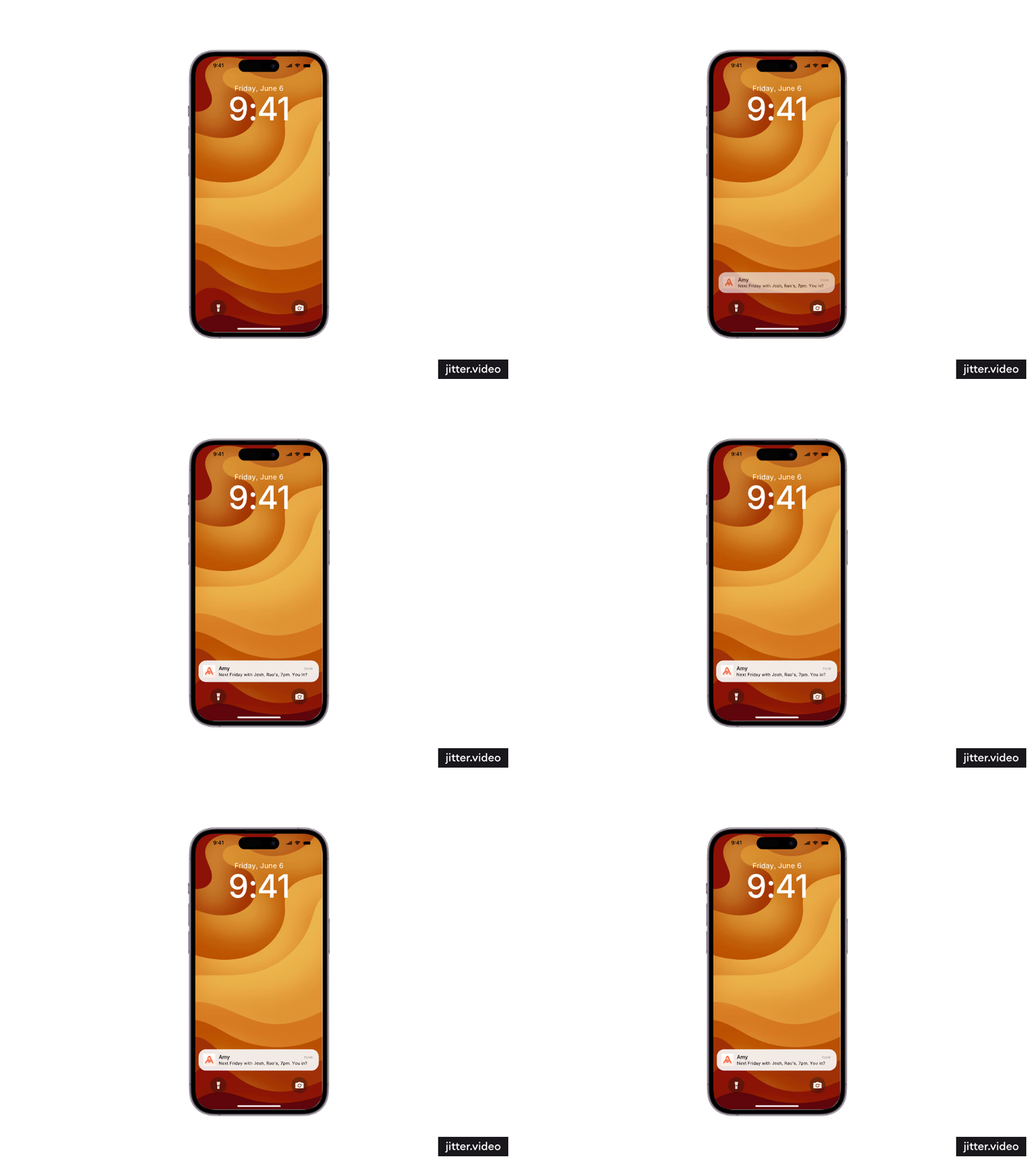
I created a social secretary for my client — a scheduling system designed around one core insight: the moment most likely to produce the next meeting is the moment immediately after the last one ends.
This is a heuristic known as temporal coupling. Rather than asking users to initiate plans from scratch — a high-friction, high-cognitive-load act — the system anchors the next meeting to the close of the current one, when motivation is highest, context is shared, and momentum already exists. The trigger is not a notification into the void. It is a nudge at the exact moment of warmth.
The design draws on BJ Fogg's behavioral model : every behavior requires a trigger, sufficient ability, and motivation to align simultaneously. But where most habit-forming products are built around individual reward loops (the scroll, the like, the streak), AmyConnects is built around a relational one. The reward is not dopamine. It is always knowing - when and where will we meet up again? Amy makes the history you accumulate together - preferred venues, recurring contacts, a timeline of your friendship - tangible.
Historically, sustained relationships required structural support: the Roman hospitium network, the rotating country house visits of pre-industrial social seasons, the Viennese coffeehouse as a standing third place. People did not maintain deep friendships through willpower. They maintained them through infrastructure. AmyConnects is an attempt to rebuild that infrastructure for urban adult life — one that works not by demanding more effort, but by engineering the path of least resistance to lead toward connection.
the takeaway
Friendship decay is not a personal failure. It is a design problem. The same behavioral architecture that technology has used to commodify attention can be reoriented — to protect the relationships that make a life feel full.
-
![]()
flow analysis
-
![]()
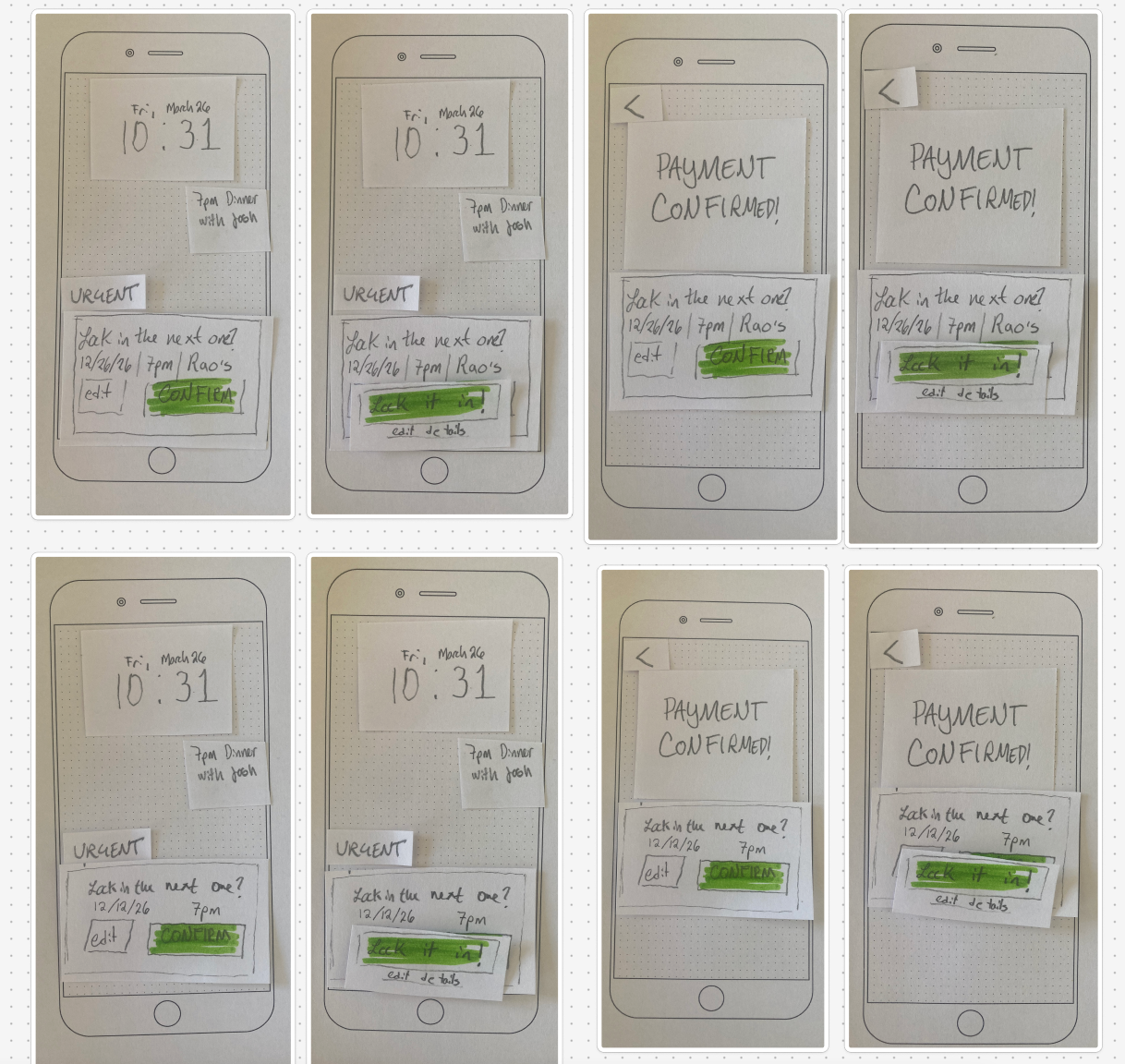
designing a follow-up algorithm
-
![]()
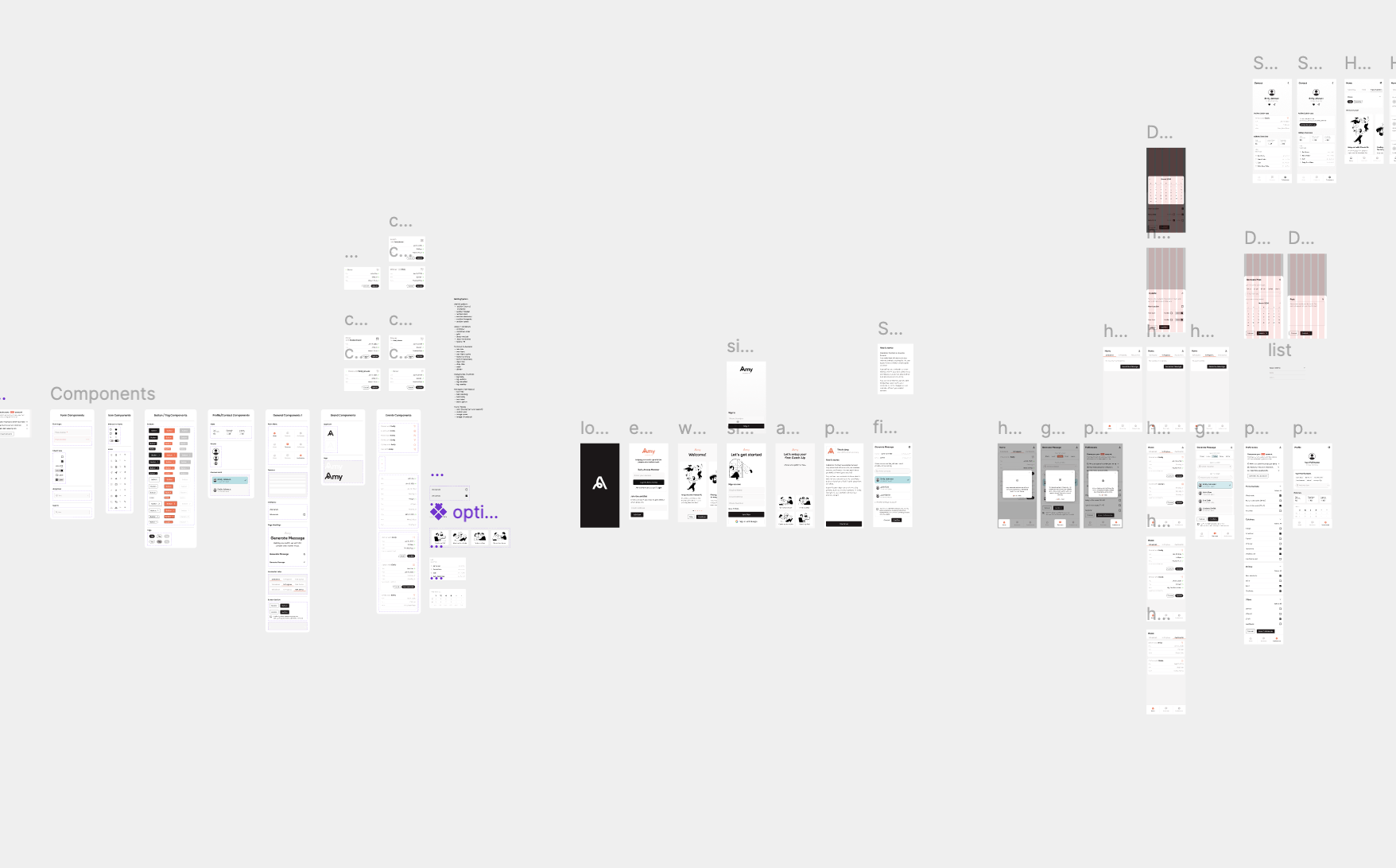
v1.0 prototyping
-
![]()
quick iteration on paper


Toward a Culture of Care | The Collectivistic Advantage
I grew up in Quincy Point — a working-class neighborhood on the southern edge of Boston, built around the Fore River shipyards that once employed tens of thousands and made it one of the busiest industrial waterfronts in America. By the time I was growing up there in the early 2000s, the yards had closed. What remained was the neighborhood itself: a dense, layered community of oldtimers and newcomers, union families and recent arrivals, all pressed together in close proximity by worker’s housing and the pull of the Red Line into Boston.
Quincy was in the middle of a remarkable transformation. What had been a predominantly working-class Irish and Southern European enclave was becoming something else entirely. Asian immigrant families had begun arriving in the 1980s, drawn by affordable housing and transit access. By the 2000s the city's Asian American population had grown to over ⅓ of its total. Indians, Albanians, Vietnamese, Cape Verdeans, single parents, sprawling multigenerational households — the neighborhood was a genuinely unusual thing: a collectivistic environment nested inside a highly individualistic society.
The boundaries of family bled naturally into the street, into the lives of people who had no formal obligation to one another but showed up anyway. You knew your neighbors. You borrowed things. You watched each other's children. Caring for the people around you was an everyday texture made natural by proximity and repetition.
Harvard economist Raj Chetty's research has shown that the communities most likely to produce upward mobility are those with low residential segregation, strong social capital, and stable mutual support structures. This was the Quincy Point that shaped me and thousands of others.
Community is something that can be deliberately built, even now, even here.
Trust as Infrastructure | Provenance as a Public Good
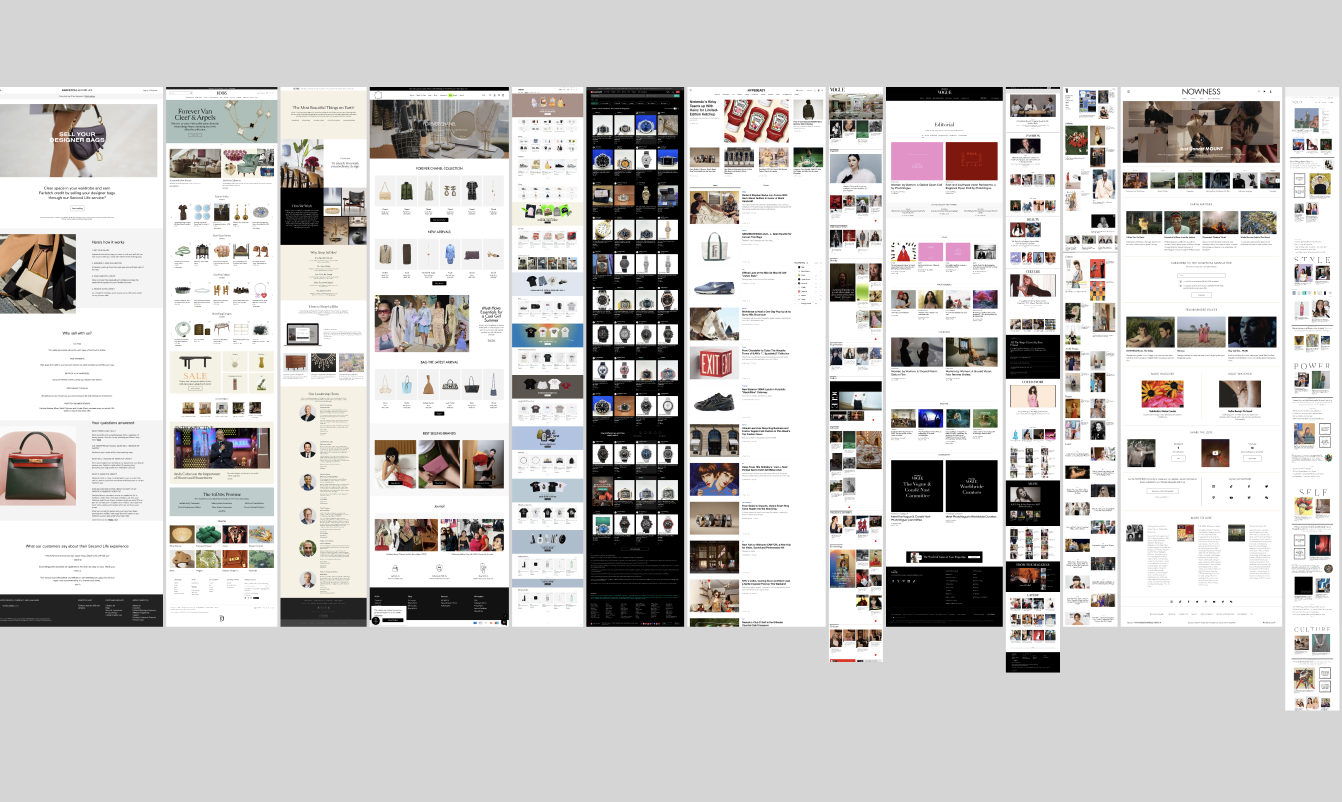
The luxury resale market is one of the most opaque transactional environments in consumer life. Prices are set by intuition, asymmetric information, and the confidence of whoever is selling. In a space where a single bag can carry the financial weight of a down payment, the absence of shared, verifiable data is not merely an inconvenience but a structural inequality. Those with access to insider knowledge profit; everyone else guesses.

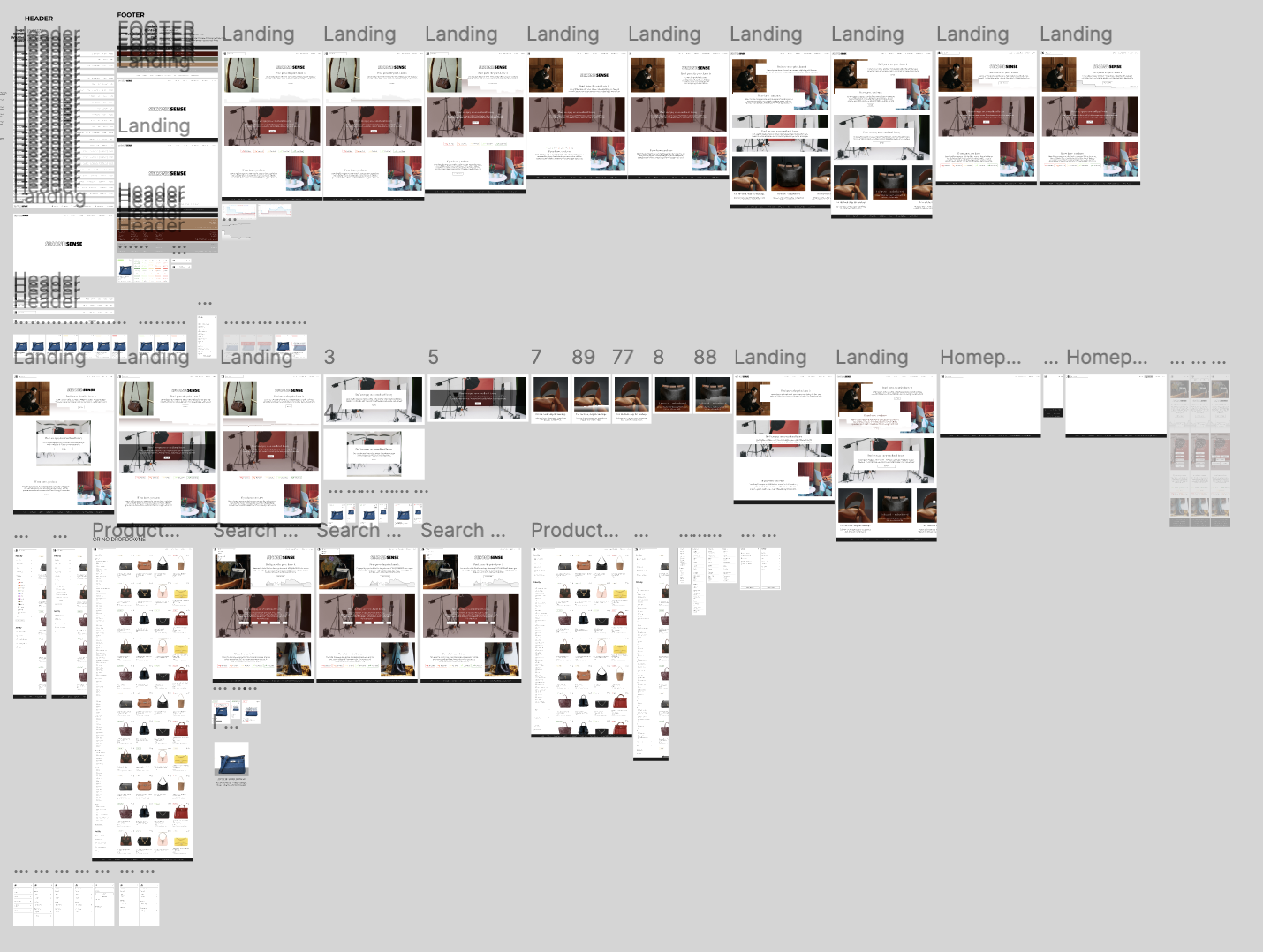
I designed and built SecondSense around a single provocation: what if price history were a public good?
Borrowing the visual language of financial markets, I reframed luxury goods as asset classes with traceable histories. Trust is built on the democratization of information. When a buyer can see that a bag has appreciated consistently over four years, they are not making a leap of faith, but an informed decision. That shift — from intuition to evidence — is the whole project.
The platform's core features were each designed as trust mechanisms. Deal heuristics ("Good Deal," "Great Deal") reduced cognitive load at the moment of decision. Shareable URL states meant that a friend's recommendation carried the data behind it, not just the enthusiasm. The wishlist's personal portfolio view reframes ownership as stewardship of an asset with a provable history.
the takeaway
Opacity is a design choice. So is accountability. When markets are redesigned to make provenance visible and price history legible, trust becomes structural rather than social — available to everyone, not just those already inside the network.
-
![]()
design exploration
-
![]()
product display page
-
![]()
marketplace moodboard
-
![]()
wishlist



Organizing for Change | All for One, and One for All
The thesis of this work is that connection requires infrastructure. So I build it.
I am fundamentally oriented toward service. I organize a recurring series of gatherings for people with ethics at their core — designers, technologists, researchers, activists, and policymakers at every stage of their lives, from new graduates to board members. What they share is not a field or a title but an orientation: a belief that the way we build things matters as much as what we build.
The formats are deliberate. Multi-day retreats that for sustained proximity and friendship. Salon-style conversations and panels that normalize candor over performance. When a room contains people at genuinely different stages and scales of influence, the usual social sorting breaks down. What emerges in its place is something rarer: actual trust.
The outcomes have ranged from co-authored chapters on human rights to collaborative initiatives in sustainability, AI governance, and European technological sovereignty. None of that was explicitly on the agenda. It was what happened when the right people were given the right conditions and enough time. Organizing these events has taught me more about community-building than any framework I've studied.
Participate in These Gatherings
The Empathy of Infrastructure | Two Studies on Digital Materiality
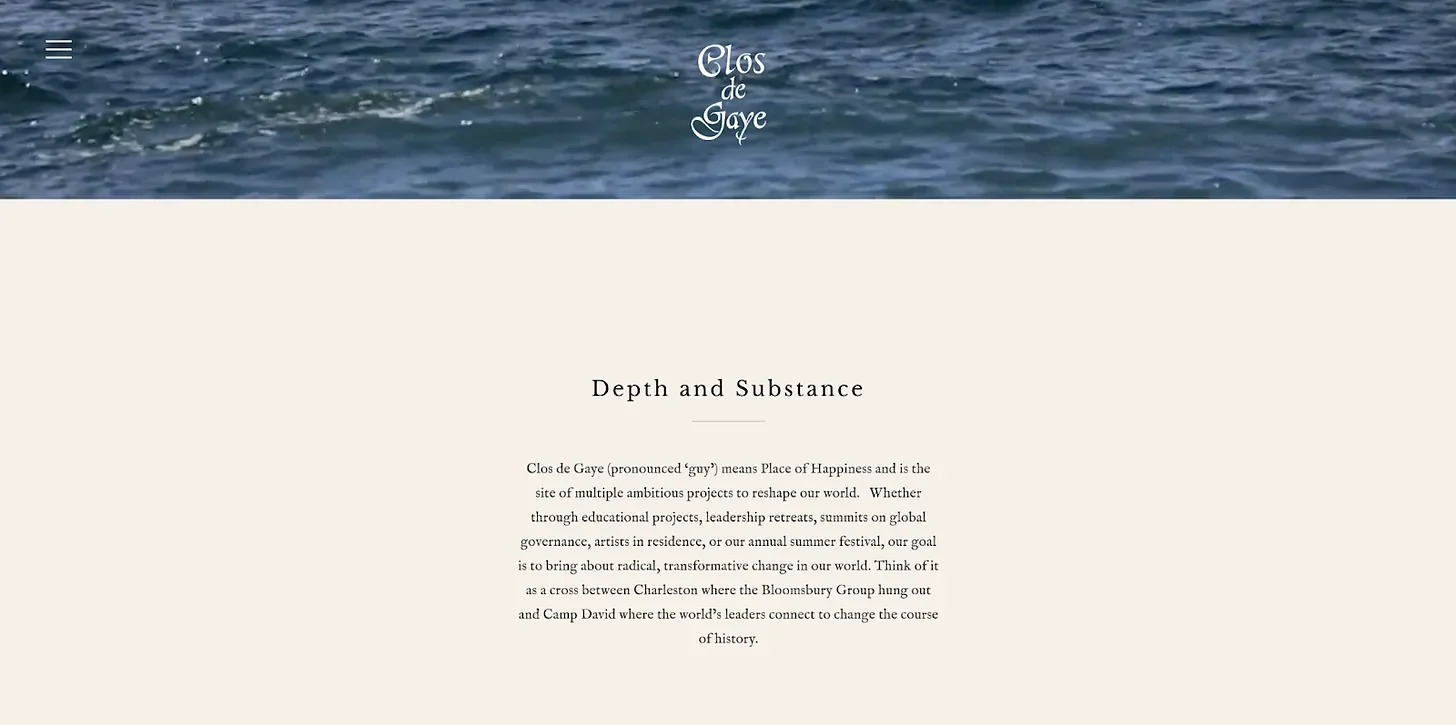
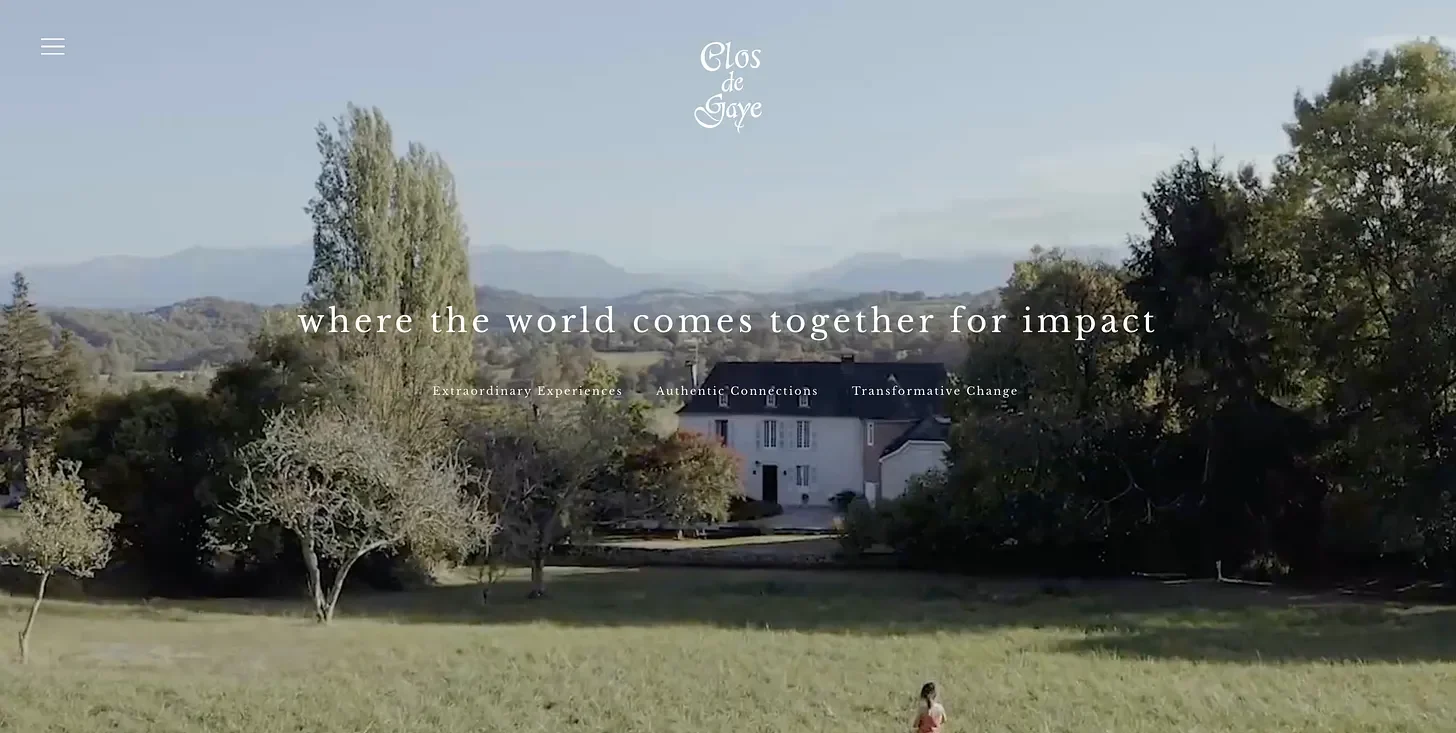
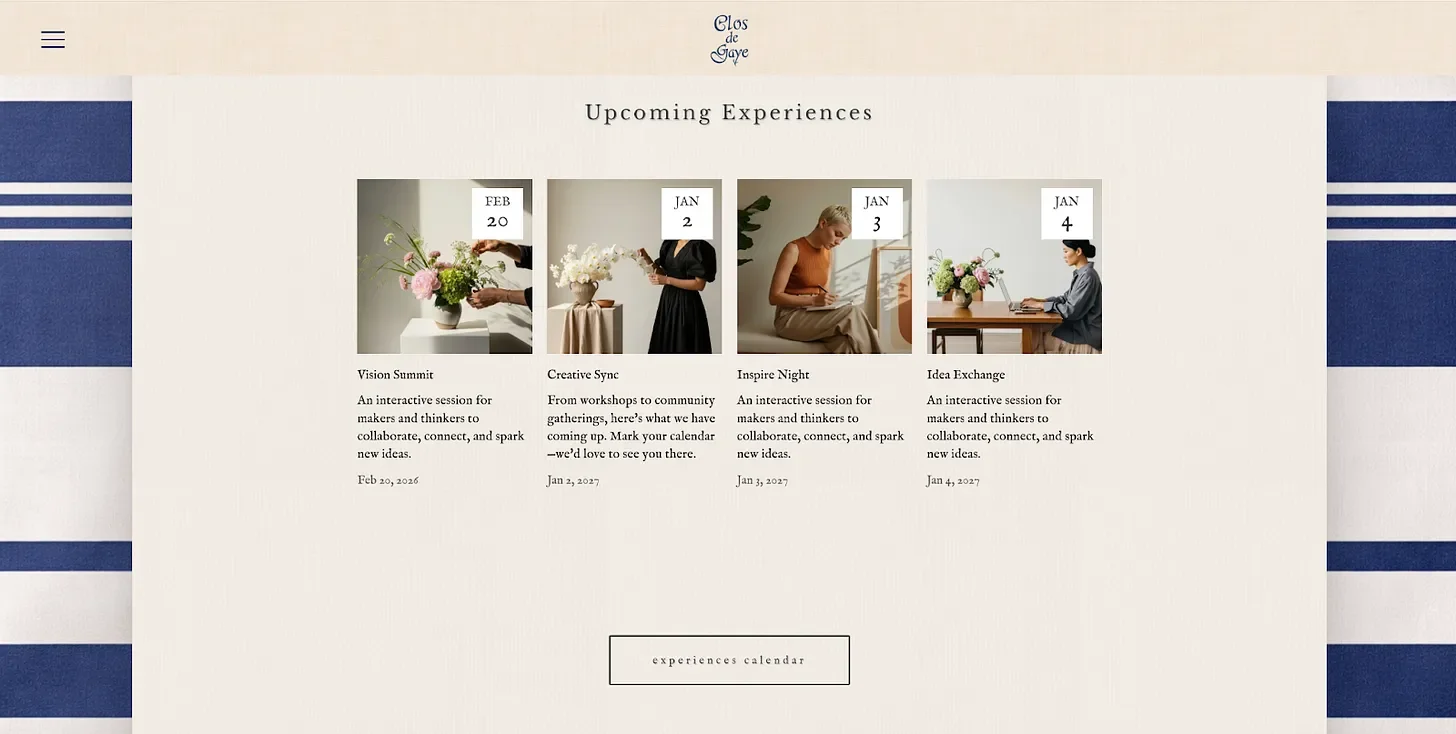
How do you translate the living presence of a 16th-century French domaine — its textures, its pace, its commitment to radical hospitality — into a digital space, without flattening it into a transaction?
I designed a digital experience around what I call cognitive quietude: a minimalist, skeuomorphic environment that borrows the sensory register of the physical — plaster walls, linen, velour — to slow the visitor down.
-
![]()
logo/texture moodboard
-
![]()
intro
-
![]()
hero
-
![]()
page incorporating textural elements

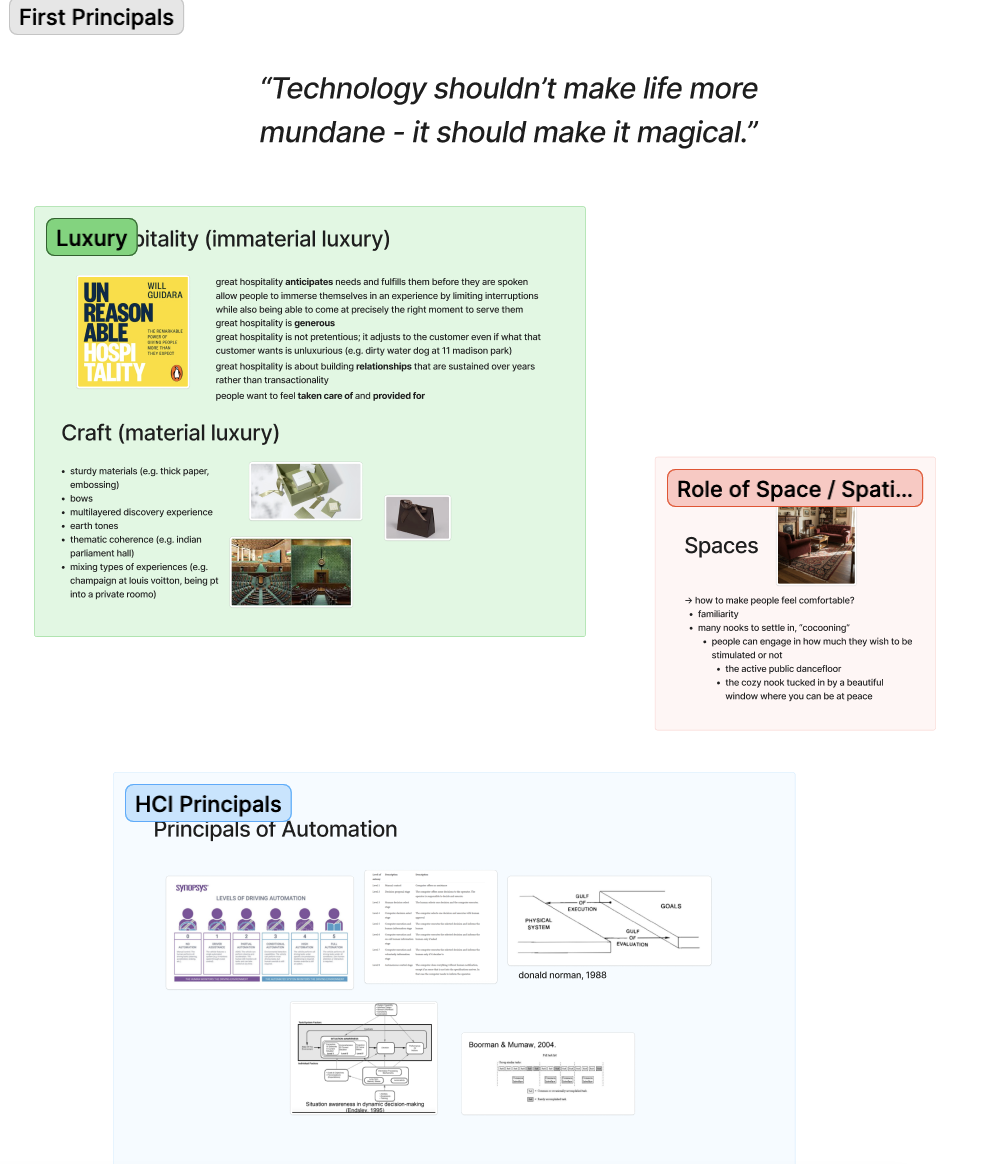
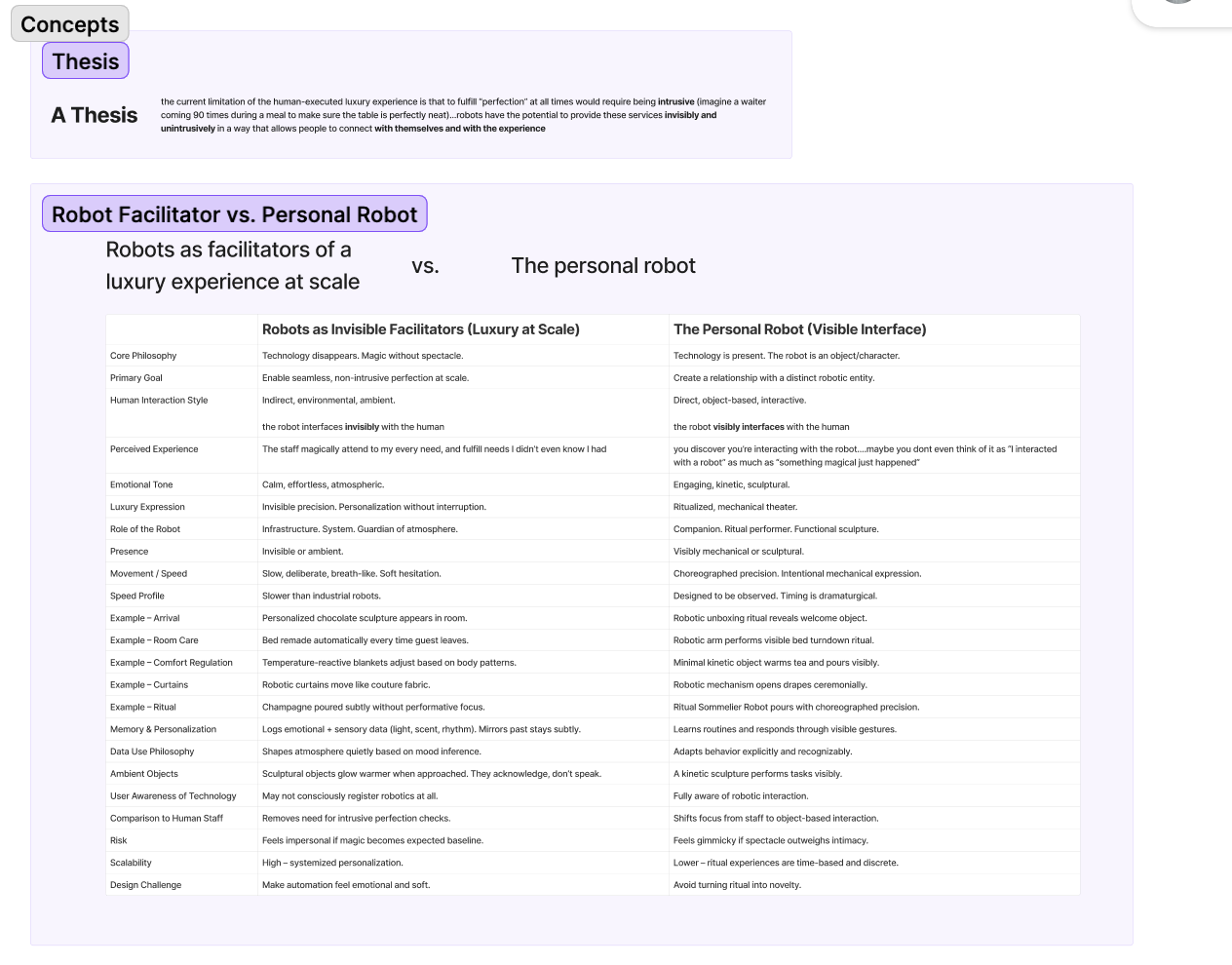
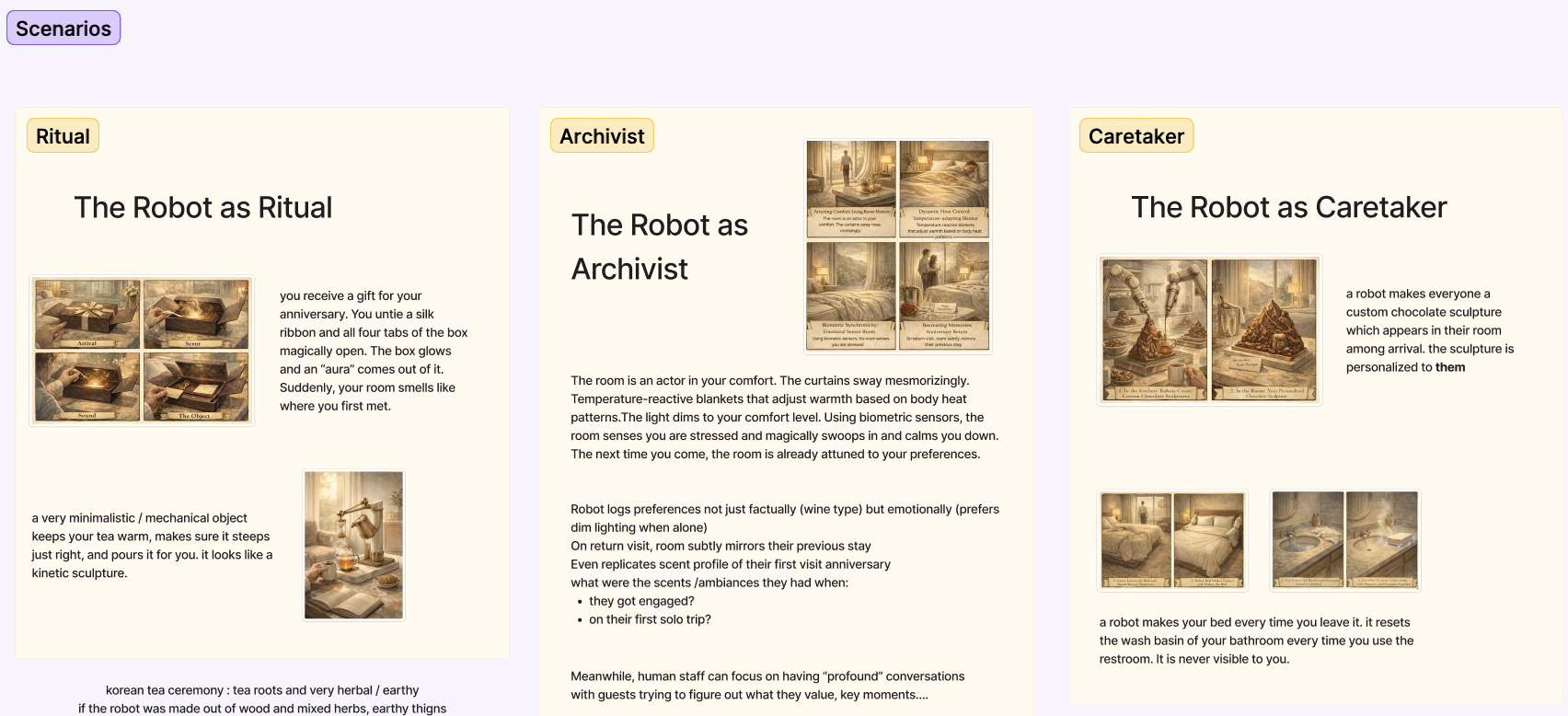
The human nervous system did not evolve to trust machines. Silent, rigid, unpredictable movement triggers threat detection, and no amount of rational reassurance overrides that signal. As autonomous robotics move into human-centered environments, the question is not whether the technology works, but whether the people in the room feel safe.
Working at the intersection of biological kinematics, proxemics, and UX design, I developed a three-phase framework for human-robot interaction in luxury hospitality contexts:
The Approach — curved, unhurried trajectories that signal deference rather than efficiency.
The Handoff — micro-yielding during physical exchanges that communicates responsiveness to the human body, not just to sensor data.
The Fade — ambient deactivation after interaction, so the robot recedes from consciousness rather than lingering as a presence to be managed.
The result is a system that does not feel like a machine fulfilling a function. It feels like care being extended.
the takeaway
High-end digital ecosystems can preserve human heritage rather than commodify it — if they are designed with the right values embedded at the structural level.
-
![]()
synthesizing first principles
-
![]()
thesis and roles
-
![]()
concepts and storyboards
The rarest thing a brand can offer is not a product, an experience, or an aesthetic. It is the feeling of belonging to something that matters.
I architect cultures of care for brands — designing high-trust environments, products, and ecosystems that transform transactions into identity, and customers into communities.
In an era of social fragmentation and transactionality, the brands that will endure are not the ones with the finest execution. They are the ones that make people feel genuinely known. I use cognitive engineering to align service, space, ritual, and technology so that belonging becomes the path of least resistance. Not a happy accident, but a designed outcome.
The result is not simply elevated experience. It is durable affiliation. Customers who return not out of habit but out of identity. Communities that form around what a brand stands for, not just what it sells. Environments — physical, digital, and social — that people feel proud to belong to and compelled to share.
This work is selective by nature. Cultures of care cannot be mass-produced. I partner with a small number of visionary brands, founders, and institutions each year — those ready to treat human connection not as a feature, but as the foundation.
If you are building something that should matter — not just impress — I would like to hear about it.